
Part 6 . . . Links to: Part 1 .. Part 2 .. Part 3 .. Part 4 .. Part 5
To review where we are at:
- The Mikado review in the Stanford Daily was written by an aficionado of the show’ but we don’t know who wrote it.
- The review has many layout mistakes, cut off letters, bad spacing, and white blemishes on each of the article’s two columns; almost like it was made in a hurry or under duress.
- It shares the page with a review for an album named “The Electric Zodiac” but in the photo “Electric” is missing, leaving just “The Zodiac.”
- The “spots” or blemishes on the Mikado review also appear on page 3 on the back side of the same piece of paper. Page 3 also shows a third mark several inches above those on the Mikado article. Closer examination of page 4 reveals the spot is there too, it was just hard to see. I posited the theory that someone poured a solvent on the page in the archived bound volume of the Daily. If so, that would be the second instance of an archive volume being modified in a Stanford student publication.
- The Mikado review has two spots on it, one on each of the two columns of the article. The review is on page four, and the spots are also seen on the other side of the paper, page three. Since it was assumed it was a solvent that caused this, page two was examined. It did not look like it had spots, but in the event the blemish was very light and unable to be seen with the naked eye, that page was brought into Photoshop and aligned with page three and four. It was then discovered that the main spot landed exactly over a short letter to the editor about…. The Zodiac Killer.
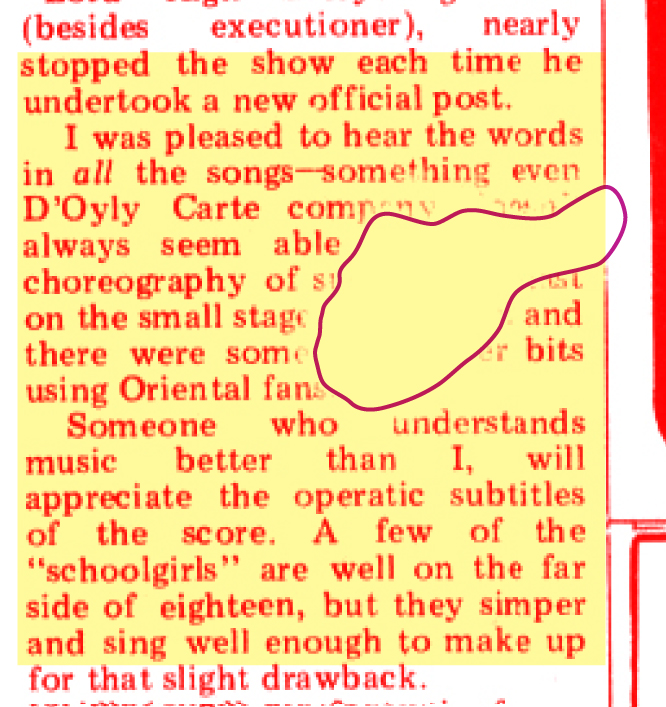
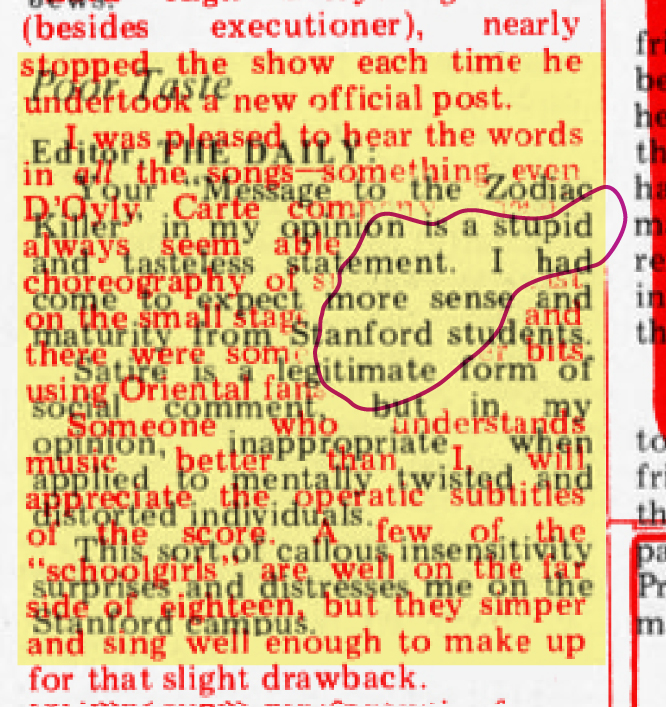
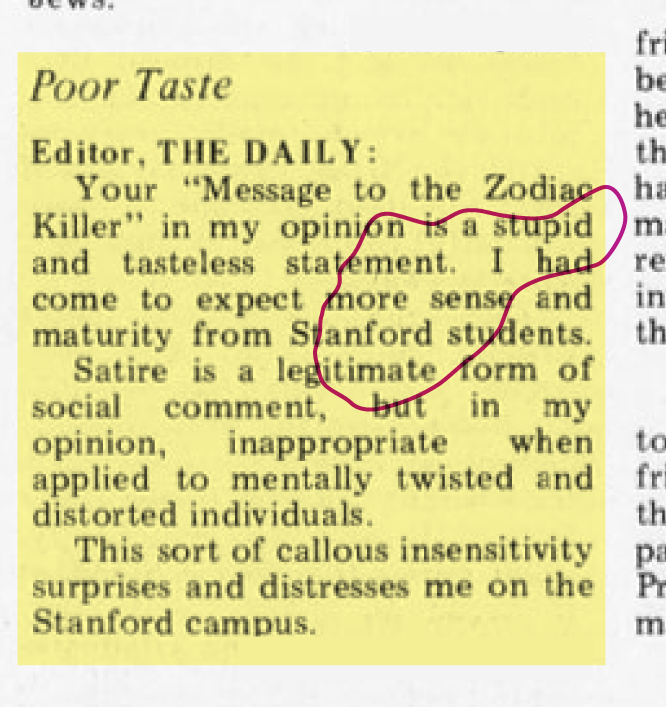
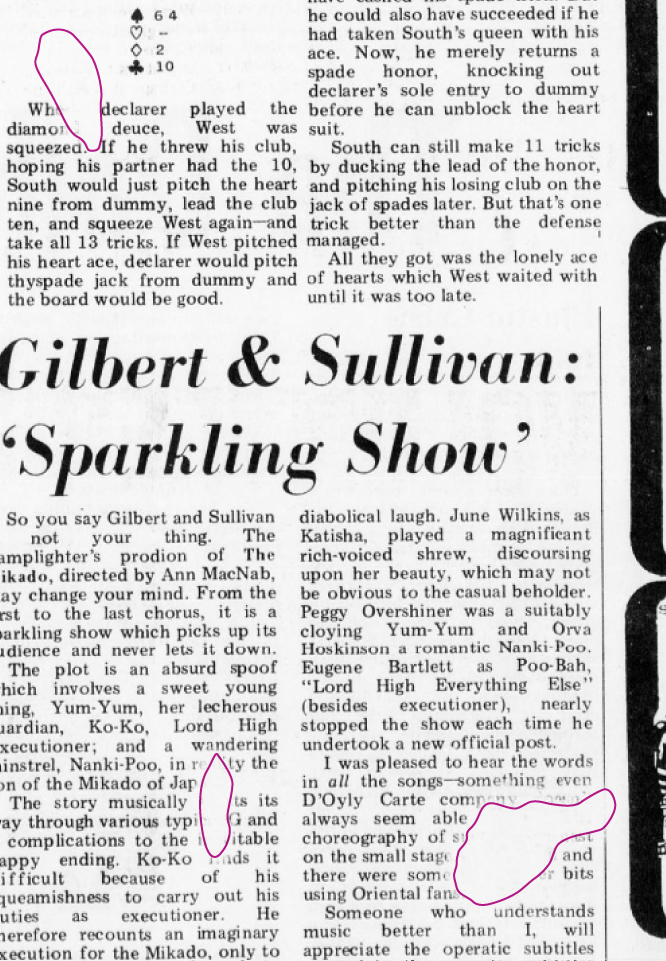
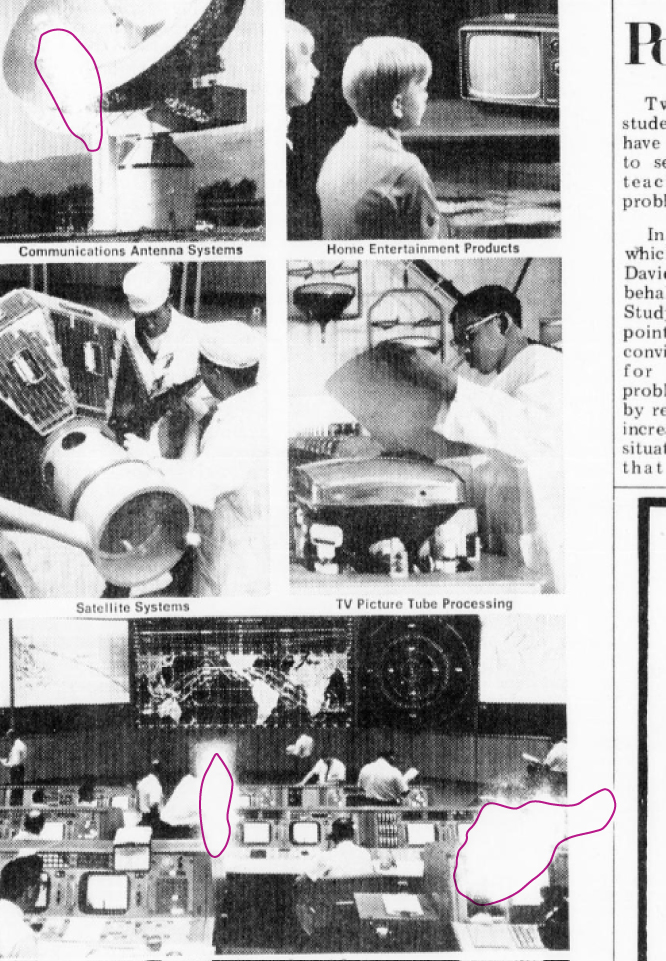
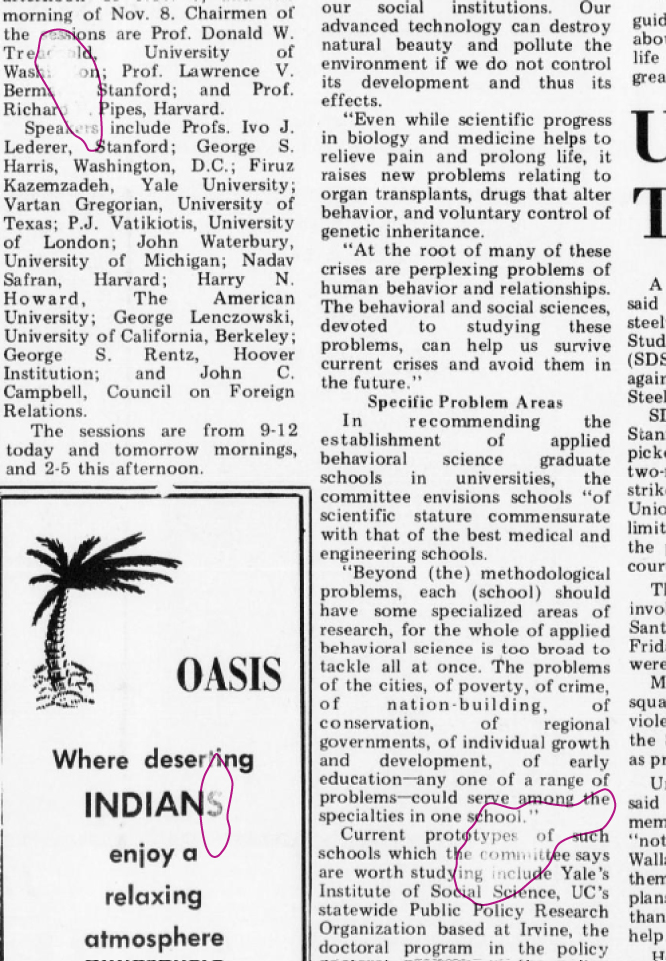
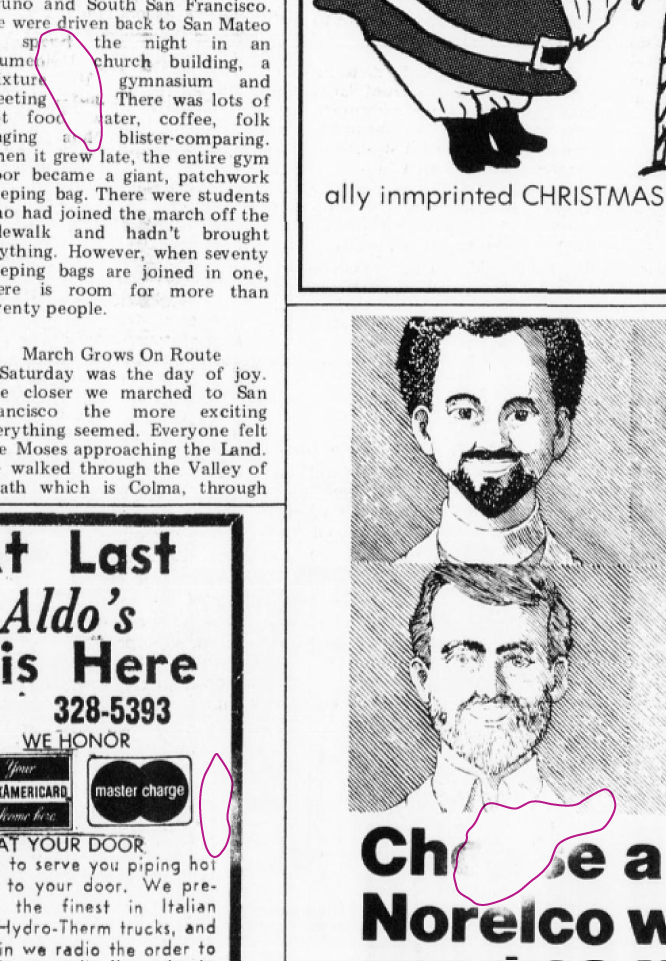
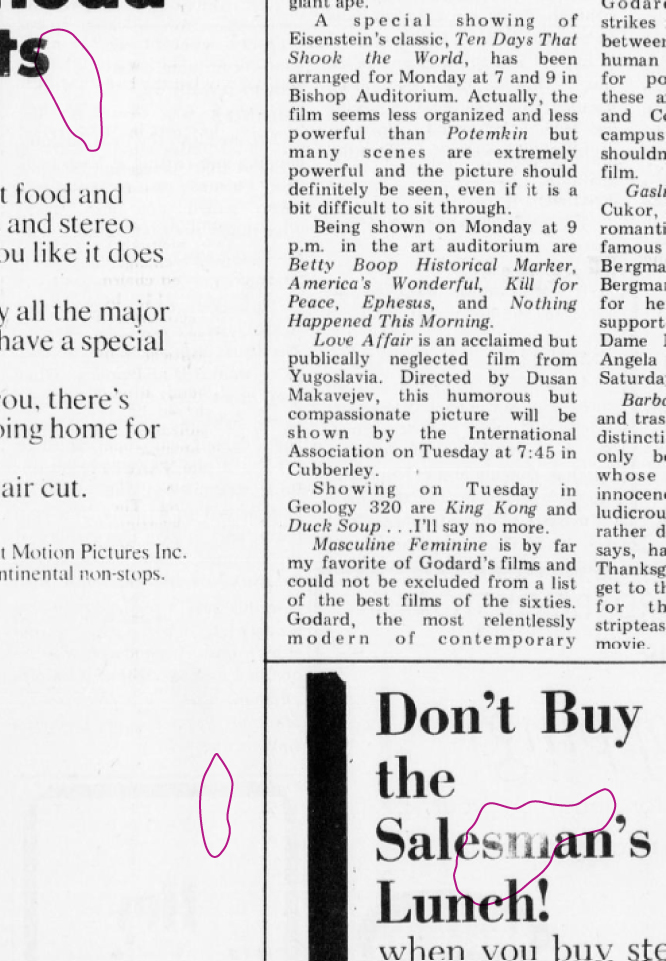
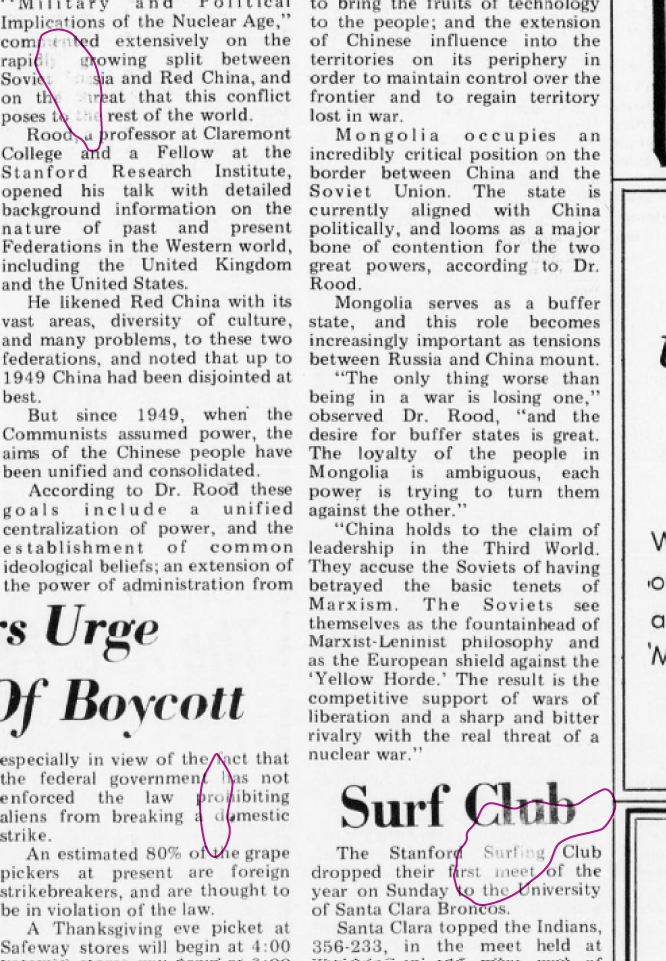
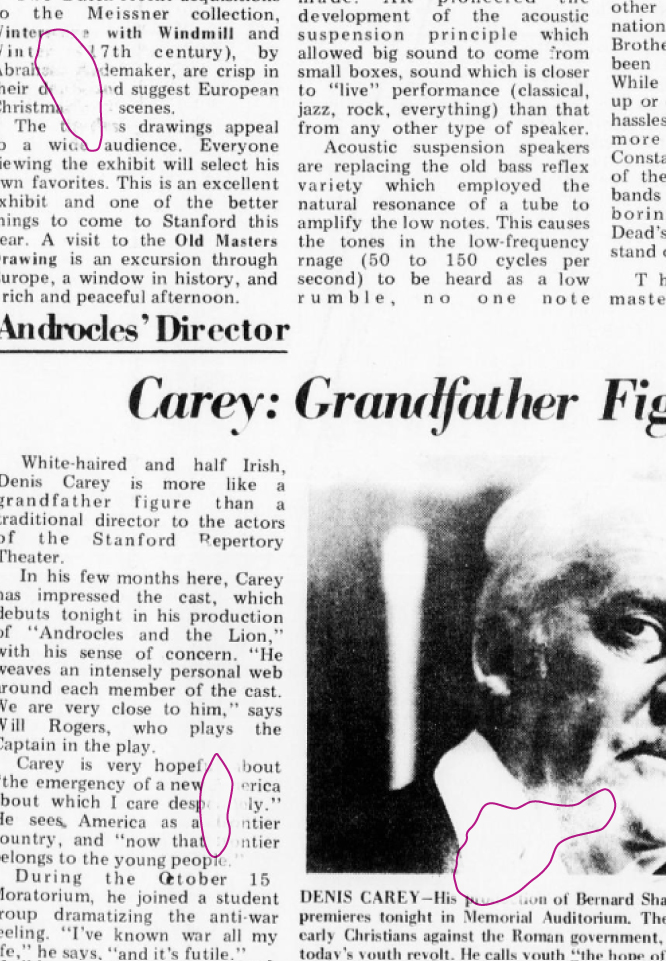
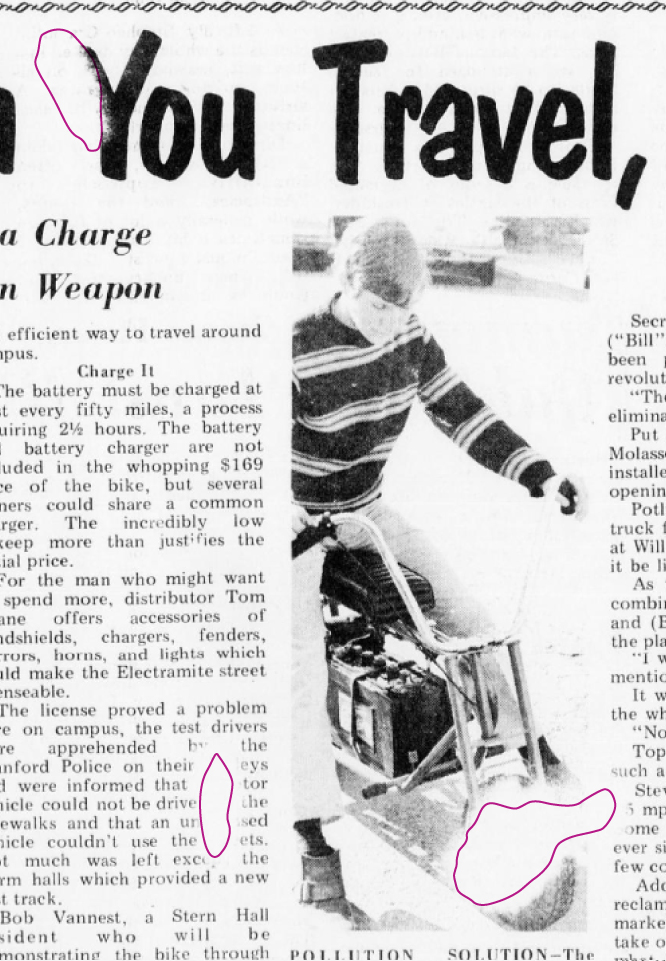
In the last post, I included a graphic outline on the “spots.” That was the original one I made early on in this investigation. I really just made a crude outline so as to more easily see where the spot landed. I eventually refined the outline, making it much more accurate. That outline is shown in these graphics. It was drawn to show the edge of where text was completely missing.
I originally thought that if the spots were significant, they should be the only ones. I mean, if someone went in and marked them on purpose, that would be a unique event. I went looking through the adjacent Daily issues, and was disappointed to find many spots in many issues. Hmmmm, it was NOT unique. And man, who is pouring solvent all over the pages of the Stanford Daily archives? It still seemed like a prank, and the Mikado thing was really just looking like a coincidence.
But then I noticed something. A lot of the spots looked the same. It was time to make yet another spreadsheet, and start entering everything I found. I’ll just cut to the quick here: Almost all of the spots did indeed look similar, and they were almost always on both page three and four–not every time, but almost.
I downloaded the pages and brought them into the same Photoshop document with the others, and saw what I had begun to suspect: The spots were basically identical, in the EXACT same place on the page, only differing in intensity and size. Sometimes the spot was barely visible at all, other times it was more pronounced then on the Mikado review.
This was NOT a solvent, at all. Not possible. It seemed to me it had to be either a scanning defect when the pages were digitized, or something on the printing press.
I found ten issues in all with spots, eight of them with the “3 spot pattern” that included the two on the Mikado review. These spots only occurred on Monday, Wednesday, or Friday. The “3 spot pattern” was on pages three and four seven times, and once on pages five and six. WTF?
The Nov. 5 issue had the spot pattern on pages three and four, as well as a very prominent spot on the front page. That spot, coincidentally, shares the front page with a small article titled “Zodiac Calls.” Yes, I said that.
Regardless, comically, coincidentally, or not, all of these spots begin on October 31, 1969, on the Mikado review.
I really couldn’t imagine how these could be a scanning defect, and imagined it had something caused on the printing press. Luckily, an old family friend, G, from back in Indiana was a newspaper man, running the local paper from around 1970 until the early 2000s. He looked at these and immediately recognized what they were.
G recognized the marks as damage caused by a crushed blanket—a blanket being a key element in the printing process. Ink was transferred to the blanket, and from the blanket to the paper. And because both sides of the paper would get printed at the same time, a defect on one side showed up on both. G said these were not really “spots” but “blemishes.”
He explained that crushed blankets usually happened when something jammed in the press, like some misfed paper.
“Could someone intentionally damage the blanket?” I asked.
“Yes, you could just touch it with your hand, wearing gloves or using a rag. More likely you would ding it with a hammer, I suppose. It would be quite easy,” G replied.
“Could you intentionally place the damage over a specific article?” I asked.
“Yes, that would be easily accomplished,” answered G.
“And how would one know where to hit the blanket?” I asked.
“Well, you just look. You can see the entire page on the blanket. It’s mirrored, but pressmen all know how to read backwards and even if you don’t, you can see the articles. You would just ding it right on it,” said G.
I processed what he said, and wondered what the probability was that a printing press just happened to malfunction and produce blemishes exactly on the Mikado article, the article that shared the page with the words “The Zodiac,” the blemishes that happened to just align right over the letter to the editor about the Zodiac.
“That’s not one F of a coincidence, that’s several.”
And another thing, the shape of that main spot, I mean blemish, if it was just one line higher, it would be not only over the letter to the editor, it would be right over the words “the Zodiac.” Just literally like one line too low, maybe an eighth or three-sixteenths of an inch. That’s weird. I wonder…
Stay tuned for Part 7, coming soon.
The Only Time Richard Got Angry at Me
Amazon Paperback – Ebook …… IngramSpark Paperback


Leave a comment